
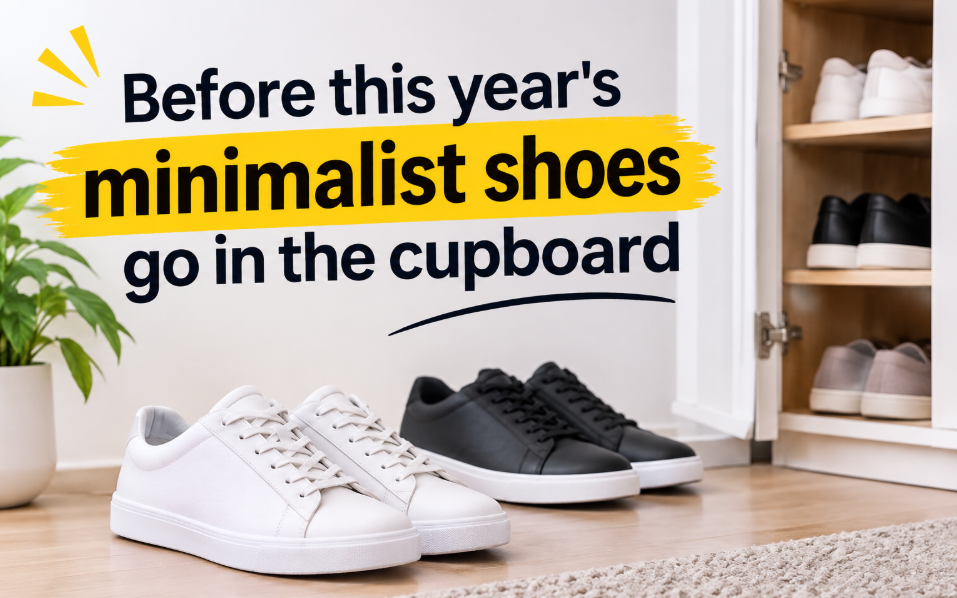
Shoes age in storage as well as on the pavement. A pair put away damp in October can come out in April stiff, smelling of the cupboard and with a sole that has started to lift at the toe, even though nobody has walked a step in it. For anyone who has built up a few pairs of barefoot shoes for women over spring and summer, November is the natural moment to look at each one properly: what to clean, what to store, what to keep wearing and what to retire.
Start with the soles, not the uppers
The upper is what catches the eye, but the outsole says more about the months behind it. Turn each pair over in good light. On a thin, flexible sole, wear tends to concentrate in a few places, and the pattern is worth noticing before cleaning removes the dust that makes it visible. Look for areas where the tread has flattened completely, for small cuts from glass or flint, and for any spot where the rubber has started to separate from the upper, usually at the very front where the toe flexes with every step.
A separation caught early is a small problem. Left over the winter, it lets dirt and moisture work into the joint. If a pair is still within its warranty, this is also the time to check. Naturcontact offers a 12 month warranty, so a pair bought in spring is still covered in late autumn, but not by the following summer. A defect noticed now and reported now is handled very differently from one discovered when the pair comes back out.
Clean gently, then dry slowly
Most minimalist shoes are made from synthetic leathers, technical textiles and knit uppers held to the sole with adhesives, and all of these dislike heat and aggressive washing. The brand’s own advice for its women’s models is to wipe them with a damp cloth and let them dry naturally, and it does not recommend machine washing because of the effect on materials and structure. Removing grit from seams and around the edge of the sole with a soft brush before wiping avoids grinding it into the surface.
Drying is where most damage happens. A pair left on a radiator or in front of a heater dries in an hour, but the rapid change can harden synthetic uppers and stress the bond between upper and sole. Room temperature takes longer and costs nothing. Taking out any removable insole lets air reach the inside of the shoe, and loosely stuffed paper absorbs moisture while helping the toe box keep its shape. Change the paper once it feels damp.
Storing so that spring starts well
A shoe that is completely dry can be stored in a breathable cotton bag or a box with a few holes in it. Sealed plastic traps whatever moisture remains and is the most reliable way to produce a musty pair in March. A cupboard against an outside wall, a garage or a loft can all be damp in winter; an internal wardrobe is usually better.
Flexibility is the quality that makes minimalist footwear what it is, and it can suffer if a pair is crushed under heavier boots for months. Store them flat, upright and side by side, not folded in half to save space. Sandals with adjustable straps keep their shape better with the straps loosely fastened. If a pair has a knit or mesh upper, keep it away from anything with rough hook fastenings that could catch and pull threads.
Deciding which pairs stay in the rotation
Not every pair needs to go away. The women’s range now includes lighter everyday shoes, trail models, Chelsea boots and lined winter boots, and some all season styles work perfectly well on dry winter days with warmer socks. A practical approach is to sort pairs into three groups. The first holds the shoes that will keep being worn through winter. The second is for summer pairs and sandals that go into storage. The third covers pairs that have reached the end.
That third group deserves an honest look. A minimalist sole worn through in one spot no longer protects the foot from sharp objects, and an upper that has stretched out of shape no longer holds the foot securely, which on a flexible shoe matters more than on a stiff one. Keeping a tired pair for the garden or for indoor use can make sense. Wearing it on a long walk usually does not.
A short checklist for the cupboard door
- Soles inspected in good light, with any lifting at the toe or deep cut noted.
- Warranty dates checked against purchase receipts.
- Uppers brushed, wiped with a damp cloth and dried at room temperature.
- Insoles removed and dried separately.
- Pairs stored flat in breathable bags, away from outside walls.
The pairs that go into the cupboard in the middle of November will come back out sometime in April or May. By then the decisions made this month, a dry insole, a reported defect, a worn pair finally let go, will be the difference between a spring that starts with familiar shoes and one that starts with a shopping list.